
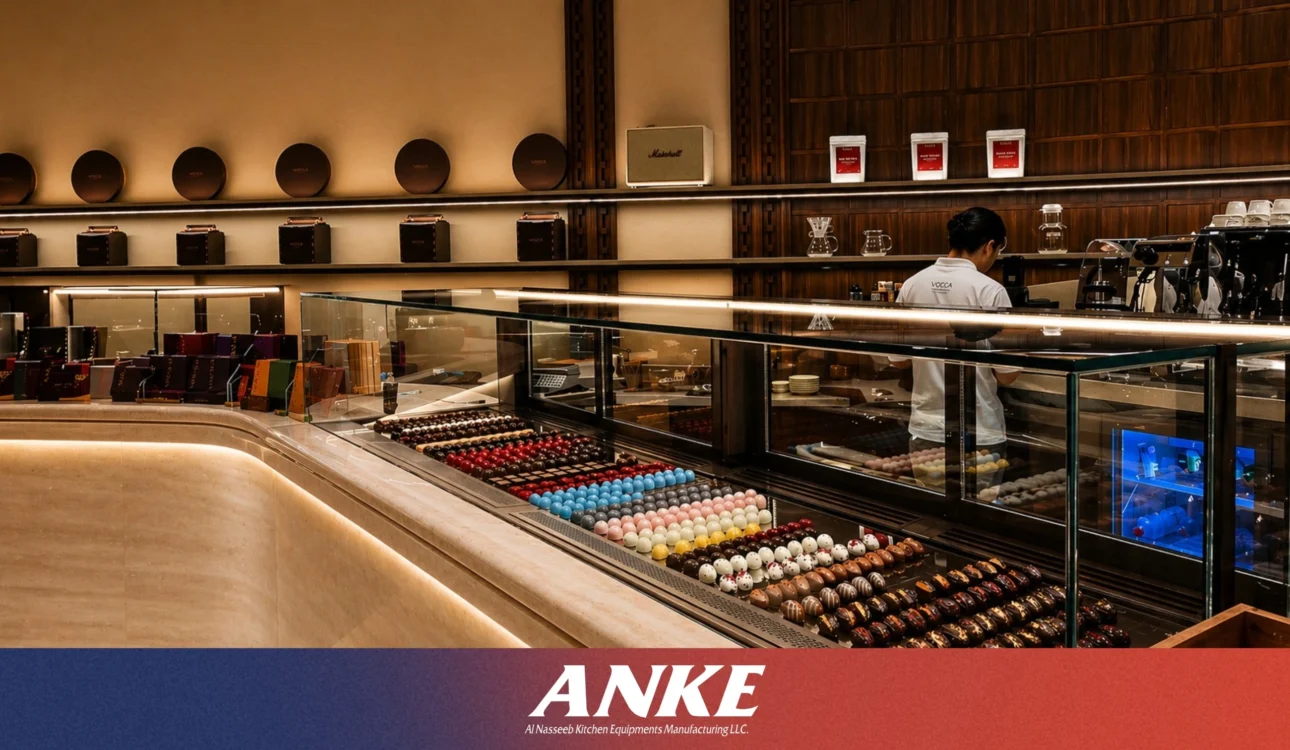
A chocolate display cabinet in Dubai should be checked daily for temperature, humidity, glass clarity, door seals, airflow, and chocolate condition; cleaned weekly; inspected monthly; and reviewed by a qualified refrigeration technician at least once a year.
A chocolate display cabinet is a commercial refrigerated display counter for pralines, truffles, chocolate bars, boxed chocolates, and gifting products. ANKE International designs custom chocolate display cabinets in Dubai for cafe, chocolatiers, hotels, bakeries, mall kiosks, and retail stores that need stable display conditions and premium presentation.
Key maintenance goals:
- Stable temperature
- Controlled humidity
- Clear glass
- Clean condenser airflow
- Longer lifespan
What Maintenance Does a Chocolate Display Cabinet Need?
A chocolate display cabinet needs daily checks, weekly cleaning, monthly mechanical inspection, and annual professional servicing. Daily care protects chocolate quality. Weekly cleaning protects hygiene. Monthly inspection protects the compressor, condenser coil, fan, gasket, thermostat, and lifespan.
| Frequency | Main Task | Purpose |
| Daily | Check temperature, humidity, glass, seals | Protect chocolate quality |
| Weekly | Clean shelves, trays, handles, base | Protect hygiene and display |
| Monthly | Inspect coils, fans, gaskets, thermostat | Reduce cooling strain |
| Annual | Technician performance check | Protect lifespan |
Why Is Maintenance More Important in Dubai?
Dubai heat, dust, coastal humidity, long mall hours, AC changes, and frequent door opening increase refrigeration strain. Dubai cafe and chocolatiers often run display cabinets for 12 to 18 hours daily, so the compressor works harder during peak service.
Dubai-specific risks:
- Higher ambient heat
- Dust on condenser coils
- Humidity near entrances
- Frequent door opening
- Long operating hours
What Temperature and Humidity Should a Chocolate Display Cabinet Maintain?
A chocolate display cabinet should normally maintain around +14°C to +18°C, depending on product type and cabinet specification. Chocolate also needs controlled humidity because moisture can cause sugar bloom, condensation, dull texture, and weak shelf appearance.
| Factor | Check | Why It Matters |
| Temperature | +14°C to +18°C | Reduces melting risk |
| Humidity | Controlled and low | Reduces bloom risk |
| Airflow | Vents open | Prevents hot spots |
| Door seals | Checked daily | Blocks warm air |
| Glass clarity | Checked daily | Protects display value |
How Does Poor Maintenance Cause Chocolate Bloom or Melting?
Poor maintenance causes bloom or melting when the cabinet cannot control temperature, humidity, airflow, or condensation. Fat bloom can appear after temperature fluctuation. Sugar bloom can appear when moisture reaches chocolate.
Quick checks:
- White marks: check humidity
- Wet packaging: check seals
- Soft chocolate: check thermostat
- Dull display: clean glass
Daily Chocolate Display Cabinet Maintenance Checklist
Daily maintenance protects chocolate quality before small problems become stock loss. Staff should check the cabinet before opening, during peak service, and before closing.
| Daily Task | Why It Matters |
| Check temperature and humidity | Confirms environmental stability |
| Wipe front glass | Improves visibility and premium feel |
| Check condensation | Identifies potential airflow or seal issues |
| Inspect door seals | Blocks warm air from entering the cabinet |
| Keep vents clear | Supports consistent airflow across all shelves |
| Rotate products | Protects freshness and manages inventory |
Can a Smart WiFi Thermostat Improve Daily Monitoring?
A smart WiFi thermostat improves chocolate display cabinet maintenance by giving managers remote visibility over display temperature, coil temperature, and lighting control. This helps teams detect cooling issues earlier and protect chocolate stock.
Smart checks:
- Internal display temperature
- Coil temperature reading
- Remote lighting control
- Cooling issue alerts
Weekly and Monthly Maintenance Checklist
Weekly maintenance removes hidden dirt, while monthly maintenance protects mechanical performance. Remove chocolates before deep cleaning. Avoid excess water near electrical parts, LED lighting, sensors, fans, and control panels.
| Frequency | Task | Why It Matters |
| Weekly | Clean shelves and trays | Prevents residue buildup |
| Weekly | Sanitize handles | Protects high-traffic touch points |
| Weekly | Check drain tray | Prevents water overflow and odors |
| Monthly | Inspect condenser coil | Reduces compressor strain and energy |
| Monthly | Inspect gaskets | Reduces air leakage and spoilage |
| Monthly | Review WiFi thermostat data | Finds early cooling issues before failure |
A qualified technician should handle complex panels, electrical parts, refrigerant checks, and internal repairs.
How Should You Clean Condenser Coils Safely?
Condenser coils should be cleaned gently because bent fins, excess water, or electrical contact can damage the cabinet. Check the manual, switch off safely, brush dust gently, keep water away, and restart the cabinet after cleaning.
What Causes Condensation on Chocolate Display Cabinet Glass?
Condensation happens when warm, moist air touches the cold glass of a chocolate display cabinet. In Dubai cafe, chocolatiers, hotels, and mall kiosks, this usually comes from humidity, frequent door opening, weak door gaskets, blocked airflow, or unstable temperature settings.
Common causes:
- Damaged door gaskets
- Frequent door opening
- High shop humidity
- Blocked internal airflow
- Wrong temperature setting
Condensation can damage chocolate packaging, increase sugar bloom risk, reduce visibility, affect hygiene, increase compressor workload, and shorten component lifespan. Read the guide on how to tackle glass condensation in display units.
Why Is the Display Chiller Not Cooling Properly?
A display chiller may stop cooling because of dirty condenser coils, blocked airflow, damaged gaskets, thermostat issues, fan failure, compressor problems, refrigerant issues, overloading, or high ambient temperature.
| Symptom | Likely Cause | Immediate Check |
| Warm cabinet | Dirty coil | Check condenser area for dust |
| Uneven cooling | Blocked vents | Rearrange products for airflow |
| Door sweating | Seal leak | Inspect gasket for cracks or gaps |
| Loud noise | Fan or compressor issue | Record the sound for a tech |
ANKE explains common display cabinet mistakes that reduce cooling performance.
How Long Do Chocolate Display Cabinets Last in Dubai?
A chocolate display cabinet in Dubai often lasts around 8 to 12 years, depending on build quality, compressor load, maintenance, dust, humidity, heat, and usage intensity. High-use mall or cafe cabinets may need refurbishment or replacement around year 8 or 9.
Short lifespan causes:
- Dirty condenser coils
- Damaged door gaskets
- Overloaded shelves
- Frequent door opening
- Poor ventilation space
Choose durable custom chocolate display cabinets if your shop needs premium appearance, long hours, and brand-matched fabrication.
When Should You Repair or Replace a Chocolate Display Cabinet?
Repair fits minor gasket issues, LED faults, thermostat calibration, drain cleaning, or simple fan problems; replacement fits repeated cooling failure, expensive compressor repair, damaged glass, poor appearance, or brand mismatch.
| Situation | Repair | Replace | Why It Matters |
| Worn gasket/seal | Yes | No | Cheap fix that saves energy |
| LED/Lighting failure | Yes | No | Simple aesthetic restoration |
| Repeated “Sweating” | Maybe | Yes | Signals structural insulation failure |
| Compressor failure | No | Yes | High cost; old units lack efficiency |
| Physical body damage | No | Yes | Impacts brand image and hygiene |
How Can Better Cabinet Design Make Maintenance Easier?
Better cabinet design makes maintenance easier through removable shelves, accessible condenser areas, correct drainage, easy-clean glass, stainless steel, service access, and controlled airflow. ANKE International can support custom chocolate display cabinet design and finish for Dubai cafe, hotels, chocolatiers, bakeries, and premium retail environments.
Final Chocolate Display Cabinet Maintenance Checklist for Dubai Shops
| Frequency | Tasks to Complete |
| Daily |
Monitor: Temperature, humidity, and condensation.
Clean: External glass and touch-points.
Audit: Door seals, airflow vents, and product freshness. |
| Weekly |
Sanitize: Shelves, trays, handles, and unit base.
Inspect: Drain tray for standing water.
Review: Temperature logs for any hidden fluctuations. |
| Monthly |
Technical: Dust the condenser coil and check fan noise.
Structural: Deep-clean gaskets and check for cracks.
Analysis: Review energy bills and WiFi thermostat data. |
| Annual |
Professional: Full refrigeration performance test.
Deep Service: Compressor health check and electrical safety audit.
System Calibration: Re-calibrate humidity sensors and replace seals. |
ANKE International designs custom chocolate display cabinets for commercial buyers who need better presentation, reliable preservation, and easier long-term operation. Request a custom chocolate display cabinet consultation.
FAQs – About Chocolate Display Cabinet Maintenance in Dubai
How often should I clean a chocolate display cabinet?
Clean visible surfaces daily, deep clean weekly, inspect mechanical parts monthly, and arrange qualified technician checks at least annually.
How long does a chocolate display cabinet last in Dubai?
A chocolate display cabinet in Dubai often lasts around 8 to 12 years, depending on quality, maintenance, climate stress, and usage hours.
Can a smart WiFi thermostat help maintain a chocolate display cabinet?
Yes. A smart WiFi thermostat helps managers monitor internal temperature, coil temperature, and lighting from a mobile app.
What temperature should a chocolate display cabinet maintain?
A chocolate display cabinet should normally maintain around +14°C to +18°C, depending on chocolate type and cabinet specification.
Why is my display chiller not cooling properly?
A display chiller may not cool because of dirty coils, blocked airflow, damaged gaskets, thermostat issues, fan failure, refrigerant problems, or overloaded shelves.
